
More businesses now want their Christmas gifts to sit comfortably with their values. Making that happen is less about finding a single “green” product and more about a set of practical decisions: what you give, how much of it, how it is made, how it travels and what happens to it in March. This guide walks through those decisions in order.
Start by giving fewer, better things
The most effective eco-conscious choice is often the least glamorous one: send less, and make each item count. A single well-chosen piece that someone uses every week has a smaller footprint than a box of novelties that are glanced at and binned. Before you look at any catalogue, ask two questions about each group on your list.
- Will this person actually use it? A drinks bottle for a colleague who cycles to work, a notebook for a client who sketches ideas in meetings, a candle for someone who works from home through the dark months.
- Will they still want it in a year? Durable, neutral designs tend to stay in use. Items tied too tightly to one year’s joke or campaign usually do not.
If the answer to either question is “probably not”, it may be better to drop that item and spend the effort on something people will keep.
Think about materials, honestly
Material choice matters, but labels can be vague. Rather than looking for the word “eco” on a product page, look at what the item is actually made of and how long it is likely to last.
Materials worth considering
- Wood for tree decorations, coasters and desk items. Ask whether the wood is from a certified or responsibly managed source, if that matters to your organisation.
- Natural fibres such as cotton or jute for bags, felt for hangers, and paper or card for notebooks.
- Stainless steel and glass for reusable bottles and cups. These are heavier to ship, but they can replace many single-use items over their lifetime.
- Recycled content in plastics, paper and textiles, where a supplier can tell you the proportion.
Questions to ask before you order
- What is this item made from, and is any of it recycled?
- Can the item be repaired, refilled or recycled at the end of its life?
- Which decoration method will be used for the logo, and does it suit the material?
- How is the item packed for delivery, and can plastic packaging be reduced?
A good supplier will answer these plainly. If an answer is unclear, it is reasonable to choose a different item rather than make a claim you cannot support in your own gift message.
A word on claims
If you describe your gift as sustainable or environmentally friendly in a card or social post, be specific about why. “Made from wood” or “designed to be reused” is clear and checkable. Broad statements without detail can come across as box-ticking, and recipients notice.
Keep branding subtle so the gift stays in use
A gift that is pleasant to use in public will be used for longer. A large logo across the front of a bottle or bag can make it feel like a promotional sample, and promotional samples tend to end up at the back of the cupboard. A small, well-placed mark, such as an engraved logo on the base of a wooden decoration or a single-colour print on a notebook corner, keeps your name present without taking over.
The same thinking applies to colour. Neutral tones and natural finishes usually age better than bright novelty colours, which helps the gift earn its place for more than one season.
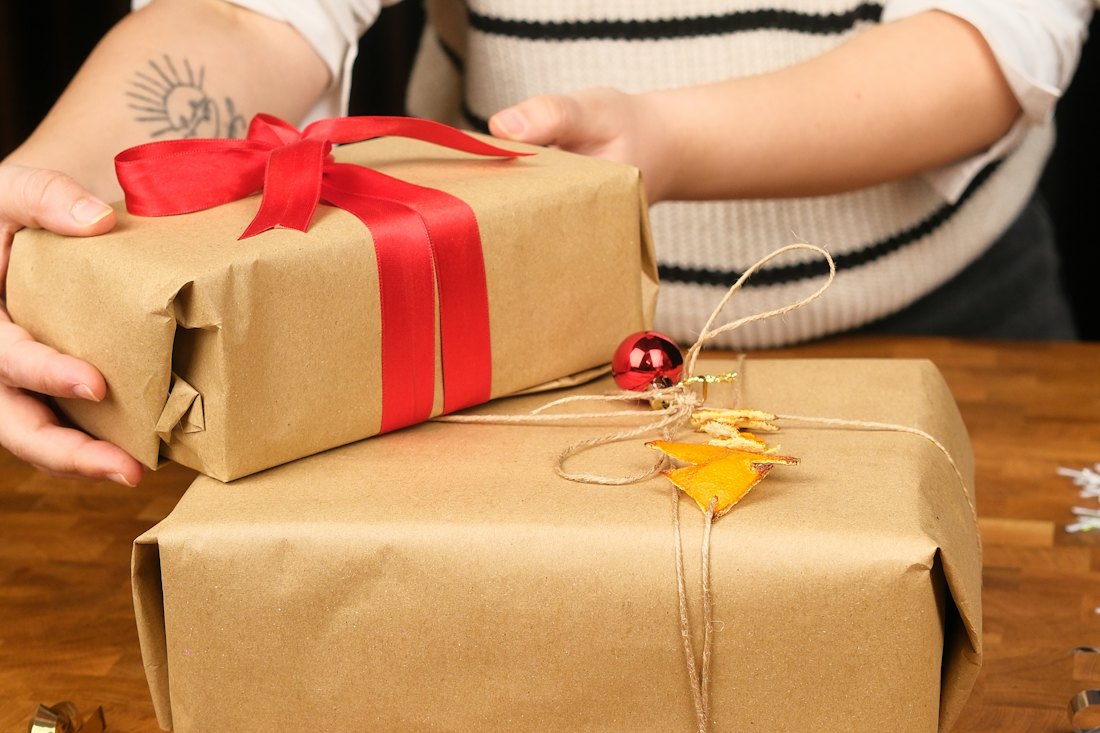
Wrapping and packaging with less waste
Packaging is where a lot of festive waste happens, and it is one of the easiest areas to improve.
- Use recyclable kraft paper or plain card boxes rather than metallic or glitter wraps.
- Tie with paper ribbon, cotton tape or natural twine instead of plastic ribbon.
- Decorate with something seasonal and compostable: a sprig of greenery or a dried orange slice.
- Choose a box that fits the gift, so less void fill is needed.
- Ask for items to be delivered to you in bulk with minimal packing, then wrap them yourself.
- Write tags by hand on card, which can go straight into paper recycling.
Many of these choices also look better. A plain box tied with twine has a warmth that glossy printed sleeves rarely match.
Plan delivery to cut unnecessary journeys
How gifts travel can matter as much as what they are made of. A few planning habits help.
- Order once, not several times. Confirming your list and quantities early means a single production run and a single delivery to you, rather than a string of top-up orders.
- Hand-deliver where you can. Local clients and office-based teams can receive gifts in person at a meeting or a team lunch, which also feels more personal.
- Group remote deliveries. If you are posting to many home addresses, send them together rather than in batches across several weeks.
Consider the gift after the giving
An eco-conscious gift has a sensible end of life. A candle in a glass or tin container can be reused as a pen pot or plant pot once it has burned down. A wooden decoration can return to the tree every year. A cotton bag can be used for years before it wears out. When you are choosing between two similar items, the one with a clearer second life is usually the better pick.
The greenest gift is the one that is still being used next Christmas.
Putting it into practice
Bringing all of this together does not need to be complicated. For many businesses, a sensible eco-conscious plan looks like this: one durable, useful item per person; a small, tasteful logo; plain recyclable wrapping; one consolidated order placed early; and a short handwritten note that explains, in a sentence, why you chose this gift.
If you are looking for a starting point, the Branded Christmas Gifts range from Brandit, an Irish online store, includes wooden decorations and other festive items that can carry your logo. Check each product description for materials and decoration options, and note that the store shows prices without VAT and prepares quotes on enquiry, so confirm current pricing directly before you plan your budget.
Takeaway. Eco-conscious gifting is mostly about restraint and care: fewer items, honest materials, subtle branding, simple wrapping and one well-planned delivery. Each choice is small, but together they make a gift that feels considered rather than wasteful.